The Ultimate Weekend in Paris: A Thoughtful Review of the Perfect 3-Day Escape
Paris has long been described as the City of Light, the capital of romance, and the cultural heart of Europe. Yet beyond its postcard landmarks and cinematic charm, Paris is also a city of neighborhoods, rituals, and small details that reveal themselves slowly. The Ultimate Weekend in Paris itinerary presents an approach that moves beyond the predictable checklist of attractions and instead invites travelers to experience Paris as a layered, living city.
This review explores the strengths of that itinerary—how it structures a long weekend, how it balances iconic highlights with local immersion, and why its neighborhood-focused approach offers a deeper, more satisfying travel experience. Rather than rushing from monument to monument, this plan encourages exploration, café culture, boutique browsing, and evenings shaped by atmosphere rather than strict scheduling.
For travelers with limited time, three days in Paris can feel impossibly short. Yet with thoughtful planning, it can also feel rich, balanced, and surprisingly complete.
A Smart Philosophy: Experience Over Exhaustion
One of the most refreshing aspects of this itinerary is its philosophy. Many short-trip guides overwhelm visitors with back-to-back major landmarks: the Eiffel Tower, the Louvre, the Arc de Triomphe, Montmartre, Versailles, and more—often squeezed into a rigid timeline. While those sites are undeniably important, attempting to see everything in 48 to 72 hours can leave travelers exhausted.
Instead, this weekend plan prioritizes rhythm over rushing. It groups experiences geographically, allowing visitors to move through districts naturally. It also blends culture, food, shopping, walking, and rest. The result feels sustainable and realistic.
Paris rewards those who slow down. Sitting at a café terrace. Wandering into a small boutique. Watching the Seine at sunset. The itinerary understands that the magic of Paris is often found in atmosphere rather than achievement.
Before You Arrive: Practical Planning Matters
A well-designed weekend begins before you even land.
Most international travelers arrive at Charles de Gaulle Airport, the city’s primary international gateway. From there, the RER B train provides a relatively efficient route into central Paris, connecting major stations such as Gare du Nord. This public transport option is affordable and avoids heavy traffic.
Once in the city, the Paris Metro becomes your greatest ally. The network is extensive, reliable, and relatively easy to navigate. For short stays, contactless travel cards such as the Navigo Easy simplify movement across the city’s arrondissements. Using public transportation not only saves time but also offers a glimpse into daily Parisian life.
The itinerary also wisely recommends choosing accommodations based on neighborhood character rather than hotel star rating alone. Districts like Le Marais, Canal Saint-Martin, or the 11th arrondissement offer different atmospheres, from historic charm to creative energy. Where you stay shapes your experience as much as what you visit.

Day One: The Historic Heart and the Latin Quarter
The weekend begins in one of Paris’s most intellectually and historically rich areas: the Latin Quarter. This neighborhood has long been associated with scholars, writers, and revolutionaries.
Starting the day with a croissant and espresso in a small café immediately establishes the Parisian rhythm. Breakfast here is not hurried; it is ritualistic. The simple act of sitting outside, even in cool weather, connects you to the city’s social culture.
From there, the itinerary encourages exploration of historic landmarks. Walking along the Seine introduces visitors to booksellers’ stalls and classical architecture. The Gothic majesty of Notre-Dame Cathedral stands as a powerful symbol of resilience and history. Even when restoration work is ongoing, the cathedral’s presence remains deeply moving.
Nearby, travelers can explore the Conciergerie, once a royal palace and later a revolutionary prison. These layers of history remind visitors that Paris is not only romantic—it is political, dramatic, and transformative.
Crossing the river toward the Tuileries Garden creates a shift in mood. The open green space provides breathing room after narrow medieval streets. Sitting among Parisians enjoying lunch or reading under trees offers an authentic local experience.
The strength of this first day lies in balance: architecture, history, relaxation, and atmosphere coexist without pressure.
Cultural Depth: Museums Without Overload
A short trip to Paris often includes the Louvre, yet many travelers underestimate how enormous and overwhelming it can be. The weekend itinerary cleverly suggests selective cultural visits rather than marathon museum sessions.
Paris offers numerous smaller museums that provide rich insight without exhaustion. For example, in Le Marais, visitors can discover the history of the city at the Musée Carnavalet or explore literary heritage at Maison de Victor Hugo, the former residence of the celebrated author of Les Misérables.
By encouraging travelers to focus on one meaningful museum per day rather than multiple massive institutions, the itinerary avoids burnout. This approach allows visitors to absorb what they see rather than merely photograph it.
Day Two: Le Marais and the Art of Wandering
If Day One centers on historic grandeur, Day Two shifts toward neighborhood exploration.
Le Marais is one of Paris’s most architecturally beautiful districts. Its medieval streets, hidden courtyards, and elegant mansions create a sense of discovery. Unlike areas dominated by tourist attractions, Le Marais feels lived-in. Locals shop at bakeries, meet friends at wine bars, and browse independent boutiques.
The itinerary highlights the importance of browsing—not necessarily buying. Shops like concept stores and artisan boutiques showcase Paris’s design culture. Even window shopping becomes an aesthetic experience.
Lunch at the historic Marché des Enfants Rouges offers culinary diversity in an informal setting. As the oldest covered market in Paris, it blends tradition with modern flavors. Eating here allows visitors to experience Paris as locals do—casual, flavorful, communal.
The afternoon may include a museum visit or simply strolling through the Place des Vosges, one of the city’s most elegant squares. Sitting on the grass while watching children play or couples converse reinforces a key message of the itinerary: Paris is best understood slowly.
Evenings in this district often revolve around wine culture. Natural wine bars and intimate bistros create a cozy atmosphere. Dining is not rushed; conversation matters as much as cuisine.
Food as Cultural Identity
The itinerary places significant emphasis on food, and rightly so. Paris is not only a city of monuments; it is a city of meals.
From buttery pastries to charcuterie boards paired with French wine, food becomes a narrative thread throughout the weekend. Rather than recommending only high-end restaurants, the guide celebrates small establishments, neighborhood cafés, and markets.
This democratization of culinary experience is refreshing. It reminds travelers that authentic flavors often exist outside Michelin-star dining rooms. Sitting shoulder-to-shoulder with locals at a modest bistro may provide more memorable insight into French culture than a formal tasting menu.
Dessert rituals, too, matter. Stopping for a tarte or éclair mid-afternoon reinforces the Parisian appreciation for indulgence in moderation.

Day Three: Flea Markets, Montmartre, and Creative Energy
The final day introduces a change of scenery and tone.
A morning visit to the sprawling flea market at Marché aux Puces de Saint-Ouen offers a fascinating look at Parisian vintage culture. Antique furniture, retro fashion, vinyl records, and art pieces create a treasure-hunt atmosphere. Even if you purchase nothing, browsing through decades of design history is captivating.
From there, the itinerary moves to Montmartre, the historic artistic district perched on a hill. Once home to painters like Picasso and writers of the bohemian era, Montmartre retains its creative aura. Climbing toward the Sacré-Cœur rewards visitors with panoramic city views.
Montmartre’s charm lies in its contradictions. It can be crowded and touristy near the main square, yet quiet and residential just a few streets away. Wandering without a strict route often reveals hidden staircases and ivy-covered corners.
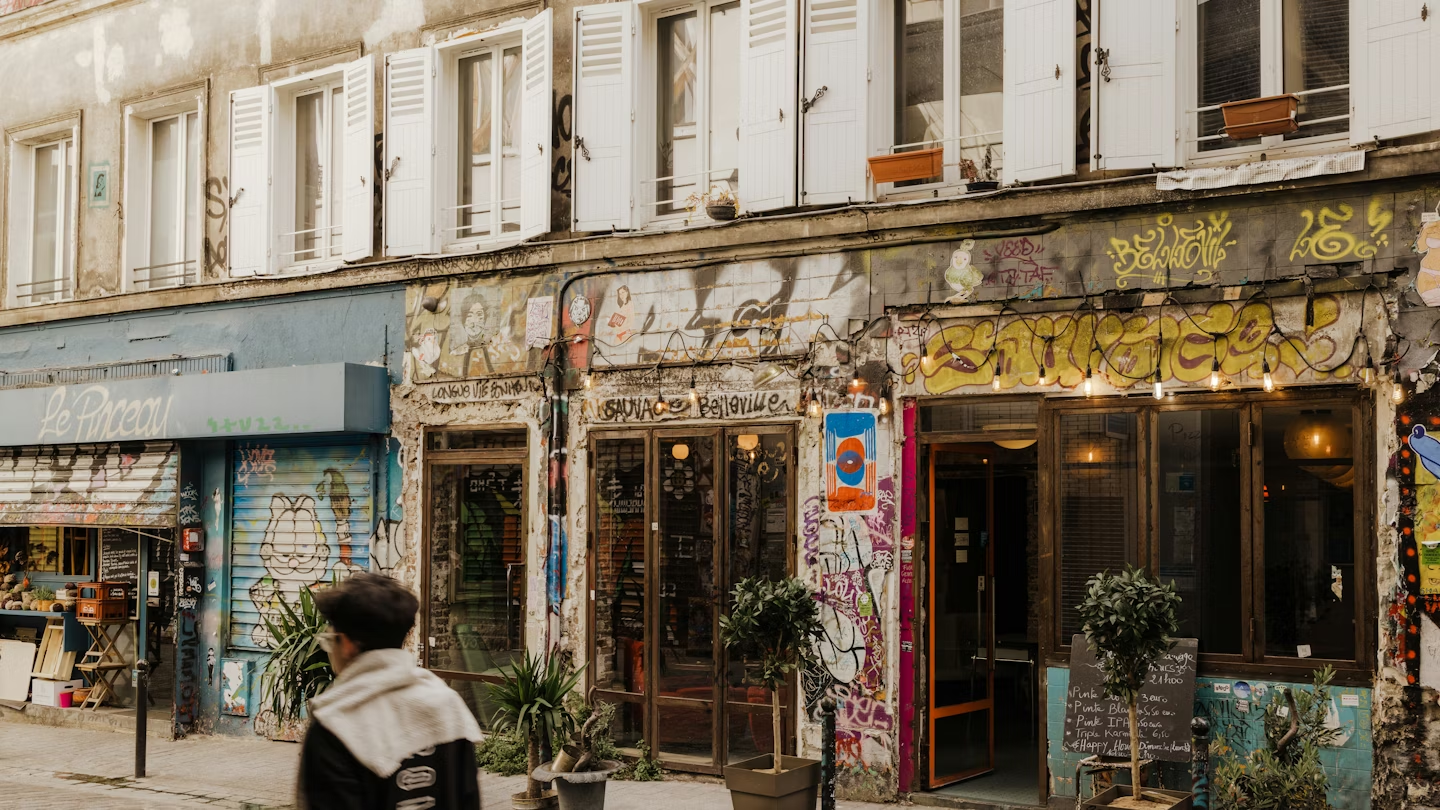
The weekend concludes in neighborhoods such as Belleville, known for multicultural vibrancy and a contemporary art scene. Ending the trip here symbolizes the itinerary’s broader theme: Paris is not frozen in the 19th century; it continues to evolve.
Transportation as Freedom
One of the strongest practical elements of this itinerary is its emphasis on public transport. The Metro connects all featured neighborhoods efficiently. For short distances, walking is often preferable, as Paris is remarkably pedestrian-friendly in central areas.
Cycling is another increasingly popular option thanks to expanded bike lanes. Viewing the city from a bicycle provides a dynamic perspective that differs from underground transit.
By encouraging flexible movement, the itinerary empowers travelers to adapt spontaneously—perhaps lingering longer in a favorite café or detouring toward an unexpected street performance.
The Strength of Neighborhood-Based Travel
The defining strength of this weekend plan is its neighborhood focus.
Instead of presenting Paris as a list of landmarks, it presents it as a mosaic of districts—each with its own personality:
-
The intellectual Latin Quarter
-
The elegant and historic Le Marais
-
The artistic Montmartre
-
The eclectic Belleville
This approach mirrors how Parisians experience their city. Residents often identify strongly with their arrondissement, frequenting local markets and cafés within walking distance.
For visitors, understanding these micro-identities adds depth. Paris stops being a backdrop for photographs and becomes a living community.

Is Three Days Enough?
Three days can never fully capture Paris. Yet this itinerary demonstrates that a well-curated weekend can feel deeply satisfying.
By balancing structure with flexibility, the guide ensures that travelers see meaningful sites while leaving room for spontaneity. It avoids both extremes: neither frantic sightseeing nor vague wandering.
For first-time visitors, the itinerary introduces essential cultural touchpoints without overwhelming them. For returning travelers, it highlights districts that may have been overlooked previously.
What This Itinerary Does Especially Well
-
Balances iconic and local experiences
-
Encourages slow travel within a short timeframe
-
Focuses on neighborhoods rather than just monuments
-
Highlights food as cultural immersion
-
Provides realistic pacing
These strengths make the plan practical and enjoyable.
Final Thoughts: A Weekend That Feels Complete
The Ultimate Weekend in Paris itinerary succeeds because it understands that Paris is not conquered—it is experienced.
From sipping coffee in the Latin Quarter to browsing antiques in Saint-Ouen, from admiring Gothic architecture to enjoying natural wine in Le Marais, the weekend unfolds as a narrative rather than a checklist.
Paris reveals itself gradually: in the echo of footsteps on cobblestones, in the golden light reflecting off the Seine, in conversations overheard at neighboring café tables. This itinerary respects that rhythm.
While no three-day visit can exhaust the city’s cultural riches, this thoughtfully structured weekend offers something arguably more valuable: a sense of connection.
For travelers seeking not just to see Paris but to feel it, this itinerary provides an excellent foundation. It transforms a short trip into a layered, immersive experience—one that lingers long after departure.